Origin
Pekowiiθa — Ashes and Dust
In Shawnee, Piqua (traditionally spelled Pekowiiθa) means ashes or dust. We are known as the people who rose from the ashes, people who have ashes on their feet, and the ash people. We are the descendants of Ancestral Algonquians.
We speak an Algonquian language, which we share with more than thirty other tribes from the Atlantic to the Pacific oceans — a kinship of language that stretches across the continent.
Time Immemorial
Shawnee Presence in Alabama
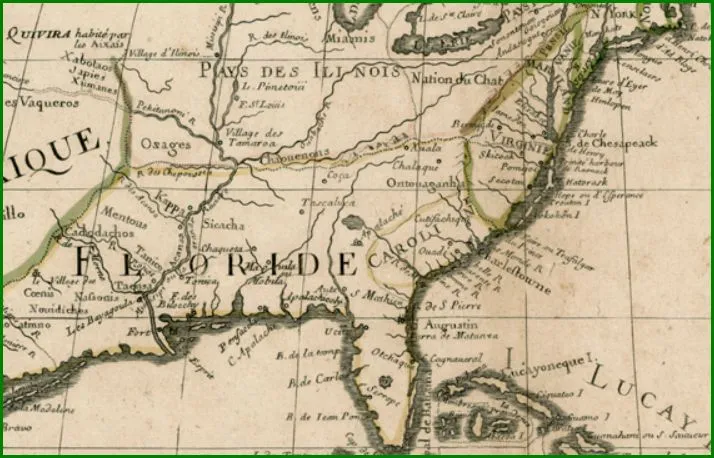
Historians state that perhaps the Shawnee people have inhabited Alabama for a longer period of time than any other geographic region. Archaeologists set the date of 1685 as the first documented evidence of Shawnee settlements in Alabama.
Oral tradition holds that the Shawnee were the original inhabitants of Tuckabatchee, a town later absorbed into the Creek Confederacy. Shawnee towns flourished across what is now central and northern Alabama:
- Sawonogi — at present-day Montgomery; the birthplace of Methotaske, the mother of Tecumseh.
- Chalakagay — at present-day Sylacauga.
- Creek Path — at present-day Guntersville.
In 1748, Peter Chartier and approximately 450 Piqua established Chalakagay, anchoring a long Shawnee presence in the Coosa River valley.
Resistance
Tecumseh's Visit
In 1811, Tecumseh — himself the son of a Piqua Shawnee mother born in Alabama — traveled to the Shawnee, Creek, and Cherokee towns of Alabama to rally allies against further American encroachment. His visit is remembered in both Shawnee oral history and the written record of the Creek Confederacy.
Because the Piqua Shawnee in Alabama maintained membership in the Creek Confederacy for diplomatic protection, federal census takers and removal officials erroneously enumerated them as “Creek Indians”— a misclassification that would shape the records for the next century.
Survival
Refusal and Concealment
“In 1832, the Piqua Shawnee refused to cede their land in Alabama to the United States and move east of the Mississippi River. Instead, we retreated into the caves, forests, and mountains of Alabama.”
We survived by publicly suppressing our culture and heritage, generation after generation. Families passed down the language, the ceremonies, and the kinship ties in private — at the hearth, in the woods, far from the eyes of the agents and the census takers.
After almost two centuries of cultural concealment, we continue to survive in our homeland as we have since time immemorial.
Recognition
State Recognition
On July 10, 2001, the Alabama Indian Affairs Commission, under the authority of the Davis-Strong Act, recognized the Piqua Shawnee Tribe as an Indian tribe in the State of Alabama — making the Piqua the first petitioning group to be recognized in seventeen years.
Recognition affirmed in law what our families had carried in private for generations: that the Piqua Shawnee never left Alabama, and that the Tribe continues as a living political and cultural community in its homeland.
Today
Government and Continuity
The Tribe is governed by a Principal Chief and Second Chief, supported by a Tribal Councilcomposed of Clan leaders, with a Council of Elders serving in an advisory capacity. This structure — Chief, Council, and Elders — reflects the traditional Shawnee model of leadership the Tribe has always practiced.
The Tribal Council elects the Principal Chief from among the Clan Chiefs and Mothers under Article 4, Section D of the Tribal Constitution and Bylaws.
References
Academic & Primary Sources
- Pickett, Albert James. History of Alabama, and Incidentally of Georgia and Mississippi, From the Earliest Period. Charleston, 1851.
- Owen, Thomas McAdory, et al. Handbook of the Alabama Anthropological Society. Alabama Anthropological Society, 1920.
- Tankersley, Kenneth Barnett, Ph.D. — Associate Professor of Anthropology (Retired), Graduate School Fellow, University of Cincinnati. Numerous published articles on Algonquian and Shawnee archaeology in the Ohio and Tennessee River valleys.
- Davis-Strong Act, Code of Alabama §41-9-708 — authorizing the Alabama Indian Affairs Commission to extend state recognition to Indian tribes.
- Guillaume de Lisle, Carte de la Louisiane et du Cours du Mississippi, c. 1700 — primary cartographic source documenting Shawnee towns in the southeast.